Energy
 Aviation
 Automotive
 Manufacturing
 Maintenance services
 Medical
Use of Wearable Augmented Reality to Support Remote Field Operations
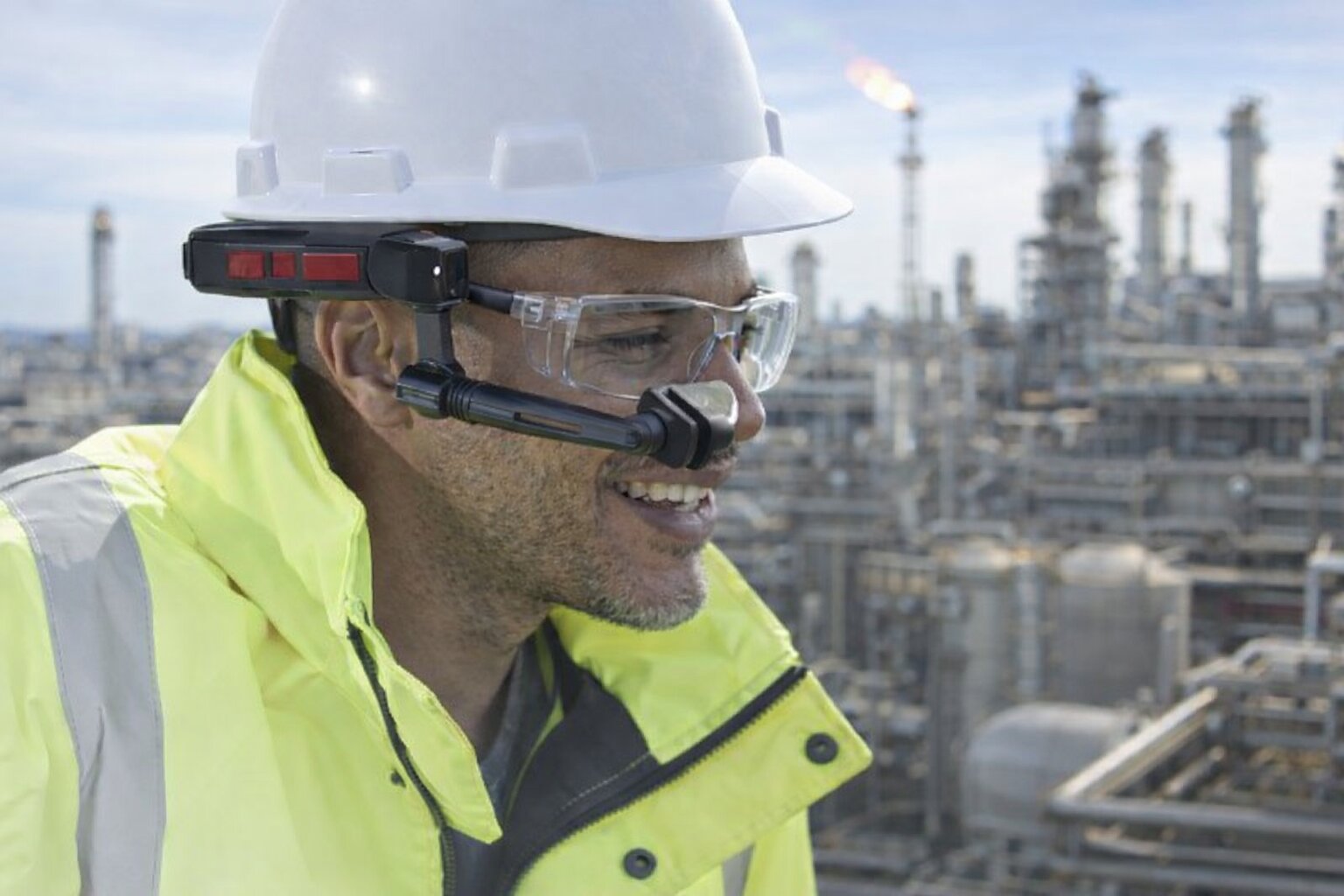
In many industrial sectors—particularly in energy, oil and gas, and infrastructure maintenance—service and operational work is often carried out in remote locations where access to specialized experts is limited. One solution to this challenge is the use of augmented reality (AR) technology in the form of wearable devices, such as smart glasses or head-mounted displays.
These solutions enable remote experts to support field workers in real time without the need to travel to the site. As a result, companies can significantly increase operational efficiency, reduce response time to technical issues, and lower operational costs.
What Is Wearable Augmented Reality
Augmented reality involves overlaying digital information—such as instructions, diagrams, or 3D models—directly onto the user’s view of the real world. In wearable AR systems, this information is displayed through a screen integrated into smart glasses or a protective helmet.
These devices are equipped with cameras, microphones, and communication modules that allow live transmission of video and audio to a remote operations center. This enables an expert to observe the situation from the perspective of the field worker and provide guidance in real time.
One of the key advantages of wearable AR technology is hands-free operation. Workers can perform technical tasks while simultaneously receiving instructions or consulting with specialists.
Remote Operations Supported by AR
Analyses described in SPE publication 223659 indicate that augmented reality can significantly improve operational processes in the energy and industrial sectors. In the studied implementations, the technology was used in several key scenarios, including:
-
remote inspections of equipment and installations,
-
troubleshooting and diagnostics,
-
quality control of components,
-
operational audits in the field,
-
support for operations on industrial facilities and drilling sites.
In practice, a worker equipped with AR smart glasses transmits a live view of the work environment to a remote expert located in an operations center. The specialist can analyze the situation in real time, provide voice instructions, or place visual annotations on the worker’s display, indicating exactly where an action needs to be performed.
Key Benefits of Using AR in Field Operations
Faster Problem Resolution
Direct communication with remote experts enables immediate support in the event of equipment failures or technical challenges. This significantly reduces downtime and accelerates the diagnostic process.
Reduced Travel Costs
One of the most tangible benefits of AR implementation is the reduction of travel required for technical experts. Many consultations can be conducted remotely, lowering logistical costs and reducing the environmental footprint of operational activities.
Improved Safety
Augmented reality systems can display step-by-step instructions, warnings, and safety procedures directly within the worker’s field of view. This reduces the risk of human error and improves safety when performing complex technical tasks.
Better Operational Documentation
AR devices enable video recording and documentation of service activities and inspections. These materials can later be used for technical analysis, audits, and training purposes.
Knowledge Transfer and Training
AR technology also supports knowledge sharing between experienced experts and field personnel. Remote collaboration allows practical training to take place during real operational tasks without requiring instructors to be physically present.
Technological Challenges
Despite its advantages, implementing AR technology in industrial environments also involves certain challenges, including:
-
ensuring reliable connectivity in remote locations,
-
adapting devices to harsh industrial environments,
-
securing the transmission of operational data,
-
maintaining ergonomics and user comfort.
For this reason, AR solutions designed for industrial applications must meet strict requirements related to durability, safety, and integration with existing operational systems.
The Future of AR-Enabled Remote Operations
The rapid development of augmented reality technologies, wearable devices, and communication infrastructure is making AR an increasingly important component of digital transformation in industrial enterprises.
Integration of AR with IoT systems, maintenance management platforms, and advanced analytics tools will further enhance the effectiveness of field operations. As a result, organizations will be able to respond faster to technical issues, improve workforce productivity, and enhance operational safety.